Remodeling
Jun 4, 2026

How to Choose the Best Flooring for High Traffic Areas

The best flooring for busy spaces balances durability, stain resistance, and easy maintenance.

How to Choose the Best Flooring for High Traffic Areas

Nicholas Laskowski

Tile

Follow me on:

Why durability matters most in busy spaces

Some rooms in your home take far more abuse than others. Before choosing a floor for a high-traffic area, it helps to understand what makes certain materials hold up better than others so your investment lasts.

  1. Match the material to how hard the room gets used.
  2. Look for strong scratch and water resistance.
  3. Choose finishes that hide everyday scuffs and dirt.
  4. Factor in easy cleaning and low maintenance.
  5. Confirm the warranty covers heavy residential use.

With those priorities in mind, a few flooring types consistently rise to the top for kitchens, hallways, and other busy areas of the home.

Choosing durable flooring for busy spaces

High traffic areas like hallways, entryways, and kitchens need flooring that can stand up to constant use without showing wear too quickly. The best choices balance durability, scratch and stain resistance, and easy maintenance. Materials such as luxury vinyl plank, porcelain tile, and certain hardwoods or laminates perform especially well in these spaces, helping your floors look great for years.

  • Luxury vinyl plank resists scratches, water, and dents in busy households.
  • Porcelain tile is nearly indestructible and ideal for entryways and kitchens.
  • Wood-look laminate offers durability with the warmth of hardwood.
  • Avoid soft hardwoods and delicate finishes in your highest-traffic rooms.

Not all flooring is built for heavy use. Before you buy, it helps to understand how each material handles scratches, spills, and constant foot traffic so you don't end up replacing your floors sooner than expected.

The most durable flooring options for high-traffic areas

Luxury vinyl plank (LVP) has become a favorite for busy homes thanks to its tough wear layer and water resistance. It stands up to pets, kids, and spills, and it's comfortable underfoot and quiet to walk on.

  • Porcelain tile: extremely hard, waterproof, and great for entryways and kitchens.
  • Wood-look laminate: durable and budget-friendly with the look of real wood.
  • Engineered hardwood: a warmer option that handles moderate traffic well.
  • Avoid soft solid woods and high-gloss finishes that show every scratch.
Which durable floor is right for each room?

The right choice depends on the room. Kitchens and entryways benefit from waterproof options like tile or LVP, while bedrooms and living rooms can handle softer materials. Think about moisture, foot traffic, and how often you want to clean before deciding.

In a high-traffic home, how a floor performs day to day matters far more than how it looks in the showroom.
Durable floors aren't about buying the most expensive option, they're about matching the right material to the right room.

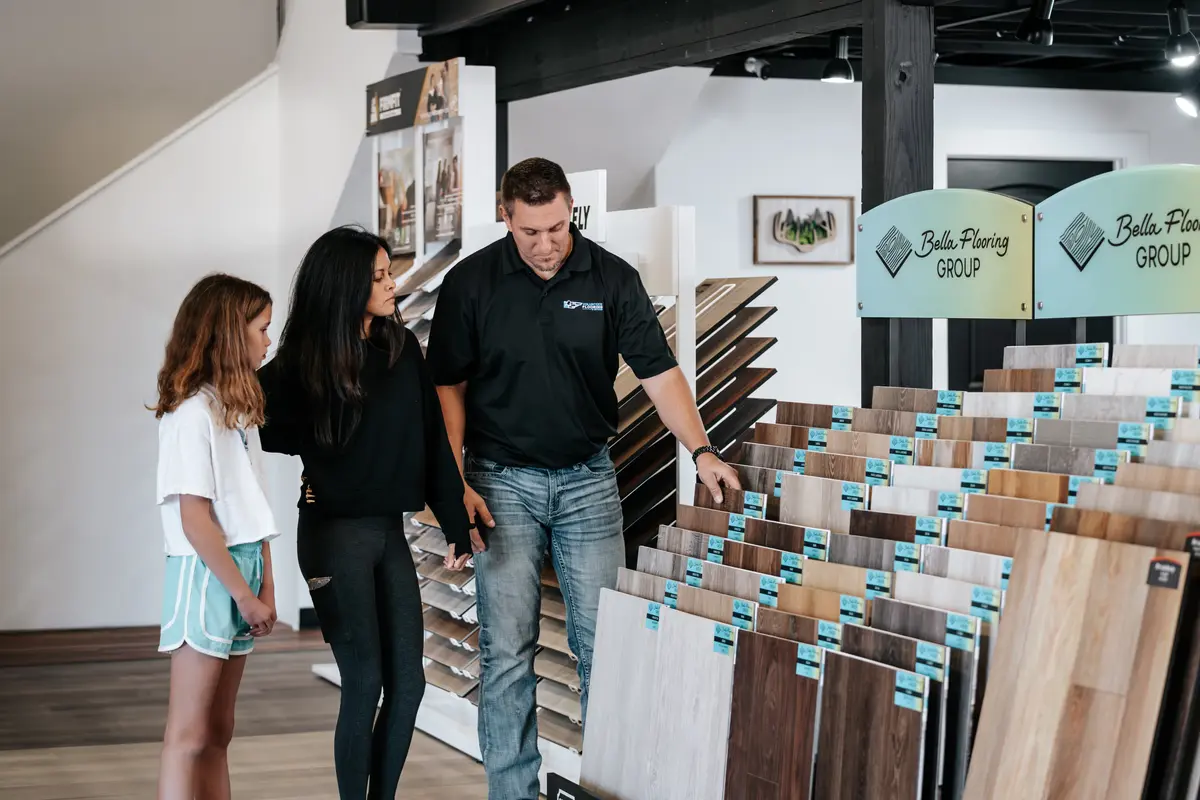
When in doubt, bring your questions to a local flooring store. The staff can recommend products proven to hold up in high-traffic homes and help you balance durability, looks, and budget so you only buy your floors once.